The Other Rope Team: What US Climbers Should Expect From a Himalayan Expedition Workforce
Photo: NASA Johnson Space Center, Public domain, via Wikimedia Commons
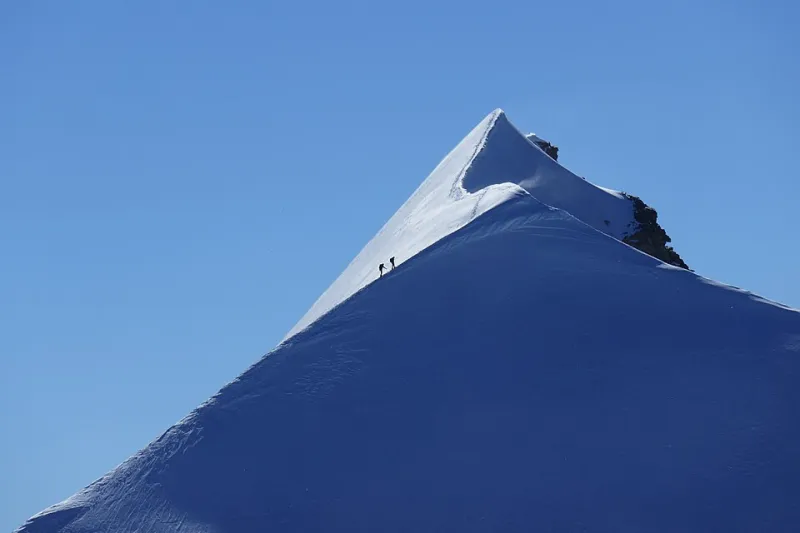
American climbers often describe a Himalayan expedition as life-changing. Fewer return with a clear account of the labor that made the experience possible. The kitchen staff, base camp crew, porters, fixed-rope workers, and high-altitude guides are not background details. They are the other rope team, and their working conditions are part of the expedition's safety architecture.
This is not an argument for guilt. It is an argument for procurement. When Americans book a high-altitude trip, they are making a series of choices about how risk and money are distributed. Those choices deserve the same scrutiny as boot selection or acclimatization plans.
Gratitude Is Not a Compensation Policy
Thanking the Sherpa workforce is appropriate. It is not a labor standard. The term Sherpa is often used broadly, but the workforce on Himalayan expeditions includes Sherpa, Tamang, Rai, Gurung, and other Nepali workers, as well as porters and base camp staff. Their roles differ, and so do their pay, insurance, and exposure to objective hazard.
A respectful partnership begins by recognizing that high-altitude work is work. It is not a cultural experience offered to climbers, and it is not a favor exchanged for gratitude. It is a job performed in dangerous terrain, often far from home, for wages that may support extended families and education costs. The relevant questions are practical: What is the daily wage? Is it paid on time? Does insurance cover medical care, rescue, repatriation, and death or disability? Who provides equipment? How many rest days are scheduled?
The Risk Is Not Shared Equally
Clients and workers travel on the same mountain, but they do not carry the same risk. High-altitude workers may cross unstable icefall terrain more often, carry heavier loads, fix ropes ahead of clients, and spend more time exposed to weather. Their insurance may be narrower than a client's travel policy, and their ability to stop work may be constrained by income pressure.
The American climber does not need to solve the entire labor economy of Himalayan mountaineering before booking a trip. But the climber should understand that a low trip price can be subsidized by thin staffing, inadequate equipment, or insurance gaps. Price is not the only signal, but it is a signal.
What Fair Looks Like in Practice
A fair expedition operator should be able to explain its staffing model without evasion. That means stating whether wages are daily or summit-based, how tips are distributed, and whether workers are covered for high-altitude rescue and medical care. It means providing appropriate clothing and equipment, scheduling rest, and maintaining a sensible ratio of workers to clients.
Fairness also means local leadership. Workers should have clear channels to raise safety concerns without fear of losing future employment. A team that cannot speak honestly about conditions is not a safer team. It is a quieter one.
Questions for the Operator
Before paying a deposit, American climbers can ask specific questions and request written answers.
- What is the daily wage for high-altitude workers, and when is it paid?
- Does insurance cover medical treatment, rescue, repatriation, and death or disability? Can the operator describe the coverage in plain language?
- Are summit bonuses the primary incentive, or is there a reliable base wage?
- What equipment is provided, and who owns it?
- How many rest days are scheduled for staff during the expedition?
- What is the staff-to-client ratio on summit day and on fixed-rope sections?
- How are tips collected and distributed?
- What is the evacuation policy for workers who become ill or injured?
If an operator cannot answer these questions, that is information. It may be a reason to look elsewhere.
Tipping Is Not a Wage Policy
Tipping has become a visible ritual at the end of many expeditions. It can be meaningful, but it should not substitute for transparent pay. A generous envelope at base camp does not correct months of undercompensation, and it does not provide insurance. Climbers should know how tips are divided and whether the operator has already built fair wages into the trip cost.
A useful rule is to treat tipping as an expression of appreciation, not as the hidden salary structure. Ask what is customary, ask how it is distributed, and do not use uncertainty as an excuse to underpay.
A 2026 Standard for Trip Selection
The American market has many choices in high-altitude expedition operators. Climbers can use that choice. Compare operators on labor practices, not only on summit statistics. Ask about insurance, wages, equipment, rest, and evacuation. Read the fine print. Speak with past clients. Look for operators that treat safety as a shared system rather than a client-service promise.
John Snorri's expedition archive returns repeatedly to preparation, respect for conditions, and the value of experienced local judgment. That ethos applies to people as well as terrain. The mountain is not a workplace for the climber alone. It is a workplace for the other rope team, too.
A respectful expedition is not one that performs gratitude. It is one that pays fairly, insures honestly, equips properly, and listens seriously. For US climbers planning a first big high-altitude trip, that standard should begin before the flight to Kathmandu.