Underfoot and Out of Date: Reading a Warming Glacier With Icelandic Guides
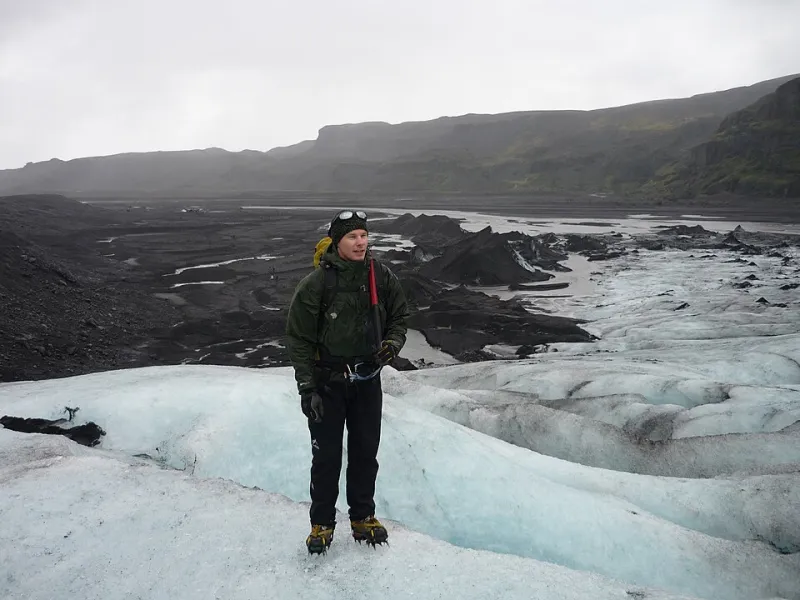
Photo: Guilhem Vellut from Annecy, France, CC BY 2.0, via Wikimedia Commons
A Route Sheet That Ages
A glacier route can look authoritative on paper. It has a line, a time estimate, a notation for a snow bridge, and perhaps a photograph from a previous season. Icelandic guides know better. They read the same route as a calendar that is being edited by temperature, meltwater, and time.
For American climbers planning high-place trips in 2026, that habit is worth borrowing. A route description is not a promise. It is a record of conditions at a particular moment. On a warming mountain, the moment may already have passed.
What Guides Watch
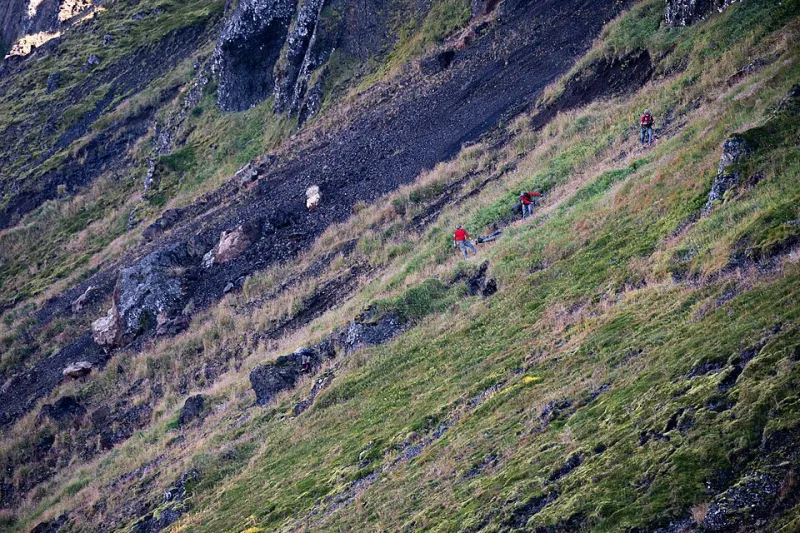
Icelandic guides and rescue workers tend to observe in layers rather than in single features. They watch the glacier terminus, the position of snow bridges, the shape of crevasse openings, the color and volume of meltwater, and the timing of rockfall or icefall. None of these observations is decisive alone. Together, they form a picture of how the mountain is behaving now.
The most practical observation is often timing. A slope that was firm at dawn may be soft by mid-morning. A snow bridge that held in cold conditions may weaken after a warm afternoon. A route that once took four hours may now require five, not because the climbers are slower, but because the mountain has changed the terms. Guides build schedules around those shifts. They do not treat an old split time as a neutral baseline.
From the Archive: Timing as Terrain
John Snorri's expedition archive contains route notes that read less like directions than like weather diaries. Times are recorded alongside cloud cover, surface condition, and the behavior of the snow. The archive does not present the mountain as a fixed opponent. It presents the mountain as a moving system that must be met on its own schedule.
That lesson travels well to American ranges, but it is especially pointed in Iceland. The country's glaciers are accessible and heavily traveled, which means guides see change up close. Retreat is not an abstract graph. It is a longer walk to the ice, a different stream crossing, a familiar snow bridge that no longer connects the same two banks. Rescue workers notice when the usual approach no longer matches the usual briefing.
Briefing Questions for American Climbers
A guide briefing should be treated as a live safety document, not a formality. American climbers can ask a few direct questions that invite specific answers rather than general reassurance.
- When was this route last inspected, and by whom?
- Which snow bridges or crevasse crossings are considered uncertain this week?
- What time window is recommended for the exposed sections, and why?
- What signs would tell the guide to turn the team around?
- What is the alternate route if the primary line is no longer safe?
- How has the glacier changed at the approach and exit since the last published description?
These questions are not signs of distrust. They are signs of engagement. A good guide will prefer them to silent assumption.
Building a Buffer Into 2026 Plans
American climbers often import a Lower 48 habit: plan for the objective, then add a little margin for weather. On a changing glacier, the margin needs to be wider and more specific. Add time for a longer approach where the ice has retreated. Add fuel and daylight for a slower return if a snow bridge forces a detour. Add a day for a briefing that may redirect the plan entirely.
It also helps to separate training from beta. Fitness prepares the body for the climb. Beta describes a mountain that may no longer exist in the form the guidebook recorded. The two should not be confused. A strong climber on an outdated route is still a climber on an outdated route.
Humility as a Safety Practice
The archive's deeper lesson is not technical. It is temperamental. A mountain that is visibly changing rewards humility more than certainty. Icelandic guides do not treat humility as a mood. They treat it as a procedure: observe, ask, adjust, and leave room for the mountain to contradict the plan.
For American climbers, that procedure is portable. Read the glacier as a calendar, not a monument. Treat the briefing as fresh information. Build timing around current conditions. And accept that the most useful route note may be the one that says the route has changed.